
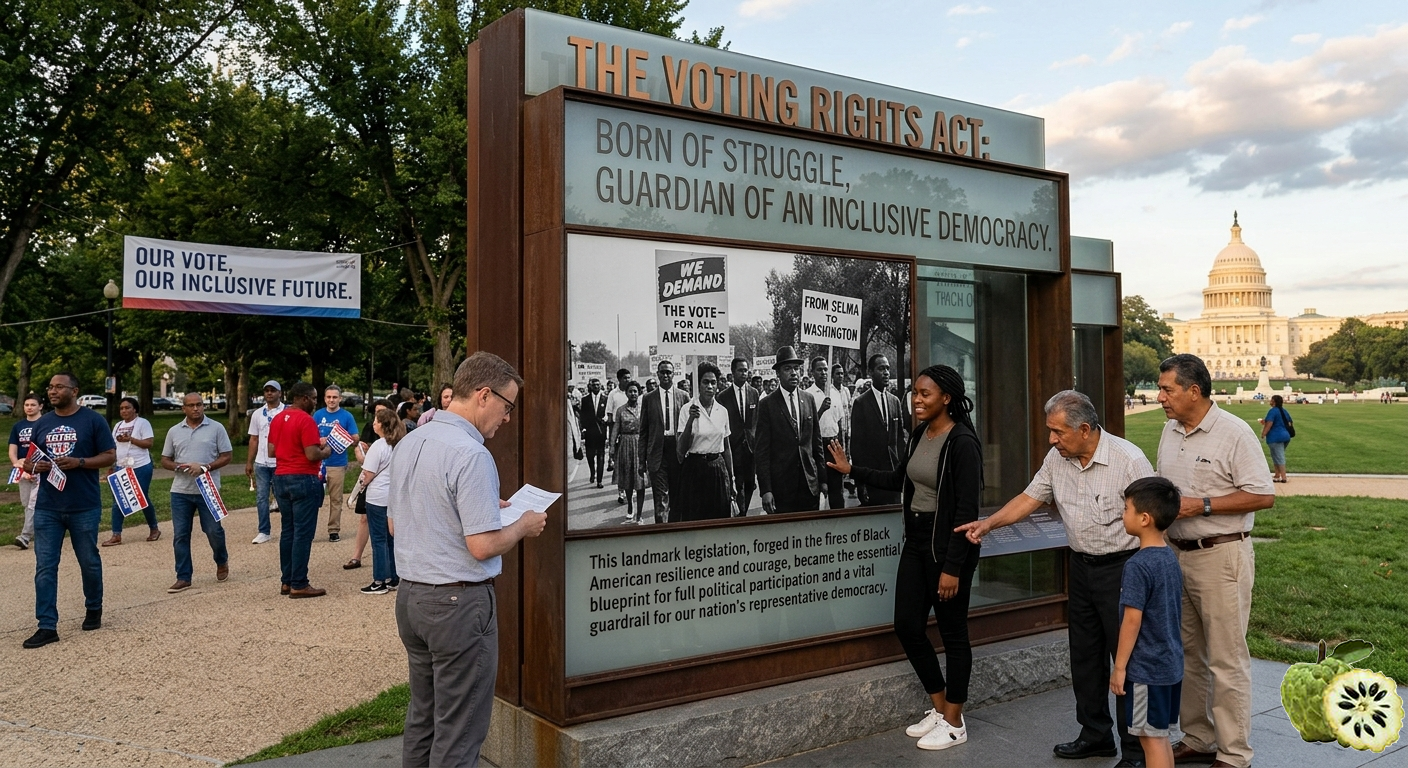
The Voting Rights Act is too often framed as protecting only one group through a single lens. That framing is incomplete, and it hides the broader democratic stakes for the entire country.
The Voting Rights Act started by and for Black Americans: it was born out of their struggle against Black disenfranchisement in the Jim Crow South and was indispensable to their hard-won claim to the ballot. It was designed to dismantle the legal and administrative systems that had kept Black people from voting through literacy tests, poll taxes, intimidation, white primaries, and local gatekeeping. Its central purpose was to stop the machinery of exclusion before it could strip an entire segment of the population of political power.
When the Voting Rights Act was strong, it functioned as a national protection against voter suppression, stopping many discriminatory voting changes before they spread. It helped make sure that access to the ballot could not be quietly narrowed by local power brokers, partisan officials, or systems designed to filter out disfavored voters, which at inception were Black voters in the South. The law did not merely address past abuse; it imposed a structure that preserved the possibility of political inclusion in the present and into the future.
The Voting Rights Act began as a response to the exclusion of one community, but it quickly became a crucial blueprint and guardrail for an inclusive democracy. Over time, its reach expanded beyond its original core, shaping how the country dealt with language-minority voters, immigrant communities, Asian voters, Latino voters, poor voters, disabled voters, and women, all of whom live within the same political system that the Voting Rights Act helped redesign. When the preclearance mechanism and other enforcement tools were strong, jurisdictions could not easily narrow access without review, and that made the system more accountable to the public as a whole.
When the Voting Rights Act was judicially weakened, states that had once been required to seek federal approval before changing election laws began passing new restrictions faster. Studies show that this shift reduced turnout, widened racial turnout gaps, and concentrated power in narrower electorates, making democratic representation less reflective of the actual population. Voting restrictions rarely stay neatly confined to one group. Once the machinery of exclusion is normalized, it migrates and mutates, targeting different communities over time.
This is why the rollback of the Voting Rights Act should be understood not as a narrow adjustment but as a big structural change. It is not only about who was initially blocked from the ballot, but about who will be able to shape the future of the country. A democracy that quietly filters out one group from the electorate is laying the groundwork for a logic that can later be turned against others.
The Voting Rights Act was never only a retrospective remedy. It was a marker of what kind of democracy the United States would be willing to protect: closed or open, defensive or inclusive. By starting with Black Americans, it grounded itself in the most brutal and visible exclusion. By growing into a broader safeguard, it became a blueprint and a guardrail: a design for a political system that could be more open to Asian voters, Latino voters, immigrant communities, women, young voters, disabled voters, low-income voters, and all others who depend on fair access to the ballot.
The question now is not only whether the country remembers the Voting Rights Act as a chapter in civil rights history. It is whether the public understands that the Act also represents an ongoing choice about power and the future. If the ballot is quietly narrowed for one group today, there is no guarantee it will stay open for the rest tomorrow. The Voting Rights Act was started by and for Black Americans and became a blueprint and guardrail for an inclusive democracy going forward — and the decision to sustain it, restrict it, or replace it will define who gets to shape what America becomes next.
Thank you
Stacy